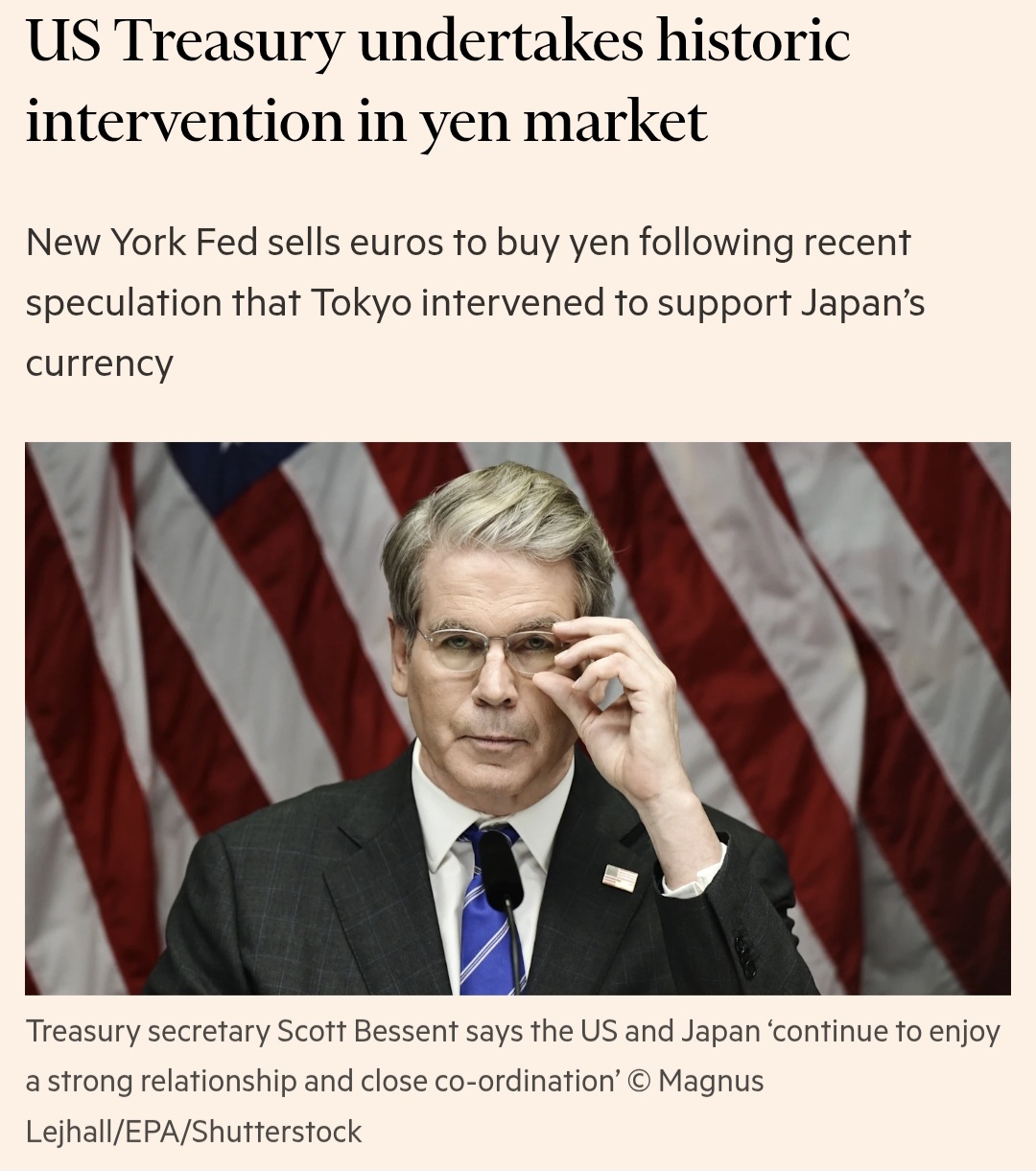
I saw an interesting story today. Apparently the Japanese economy is getting hammered by the war the US is waging against Iran as its pushed oil prices way up.
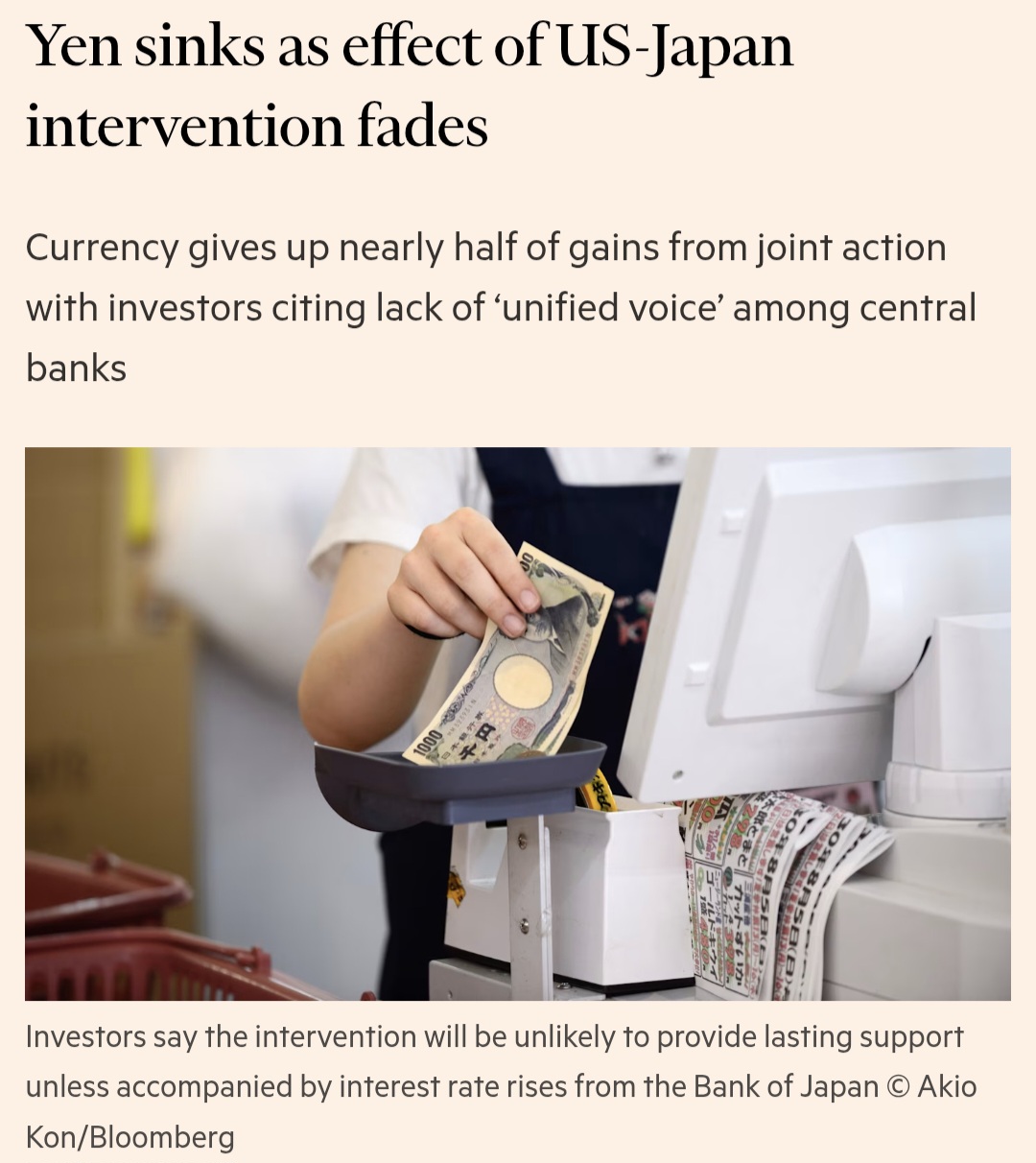
As a result, the yen is falling which gives Japan an advantage in trade which Trump hates. It sounds like they could help the yen by selling off US treasuries, which would push up US borrowing costs which Trump also hates.
This is a not true. This is what is called the secondary market. The cost of borrowing for the US government is determined in the primary market.
Granted, it is the case that private firms that issue bonds will face headwinds. Because the treasury yield curve is the base line and the firm’s individual credit risk is added to that base line. But the government transaction is history. They sold the bonds that Japan holds now long go. And the money Japan paid went to the primary dealer(s), not the US treasury.
You and Poly seem to be taking opposite stances on this and I’m not totally getting your argument.
I get that Japan selling existing bonds doesn’t alter what the US pays in interest on those bonds. My impression is if Japan sells a large amount of US treasuries, that increases the overall supply of treasuries on the market (e.g. whatever the US is selling plus what Japan’s selling). I’m guessing it pushes up US borrowing costs because the number of buyers for their new bonds gets diluted. Is that not the case?
While the yields on newly issued treasuries (on the run) are slightly below those of seasoned treasuries (spreads between .02 and .2%) any increase in yields on the secondary market will flow through to the primary market.
To clarify, borrowing costs for existing debt don’t change. It only impacts the government’s cost for new debt issuance. Which could be net new debt, or rolling over debt as old bonds mature.
I’m only referring to the US. I haven’t any knowledge of the mechanics involved at the Bank of England. Perhaps Poly can elaborate on that. I bet its different if for no other reason - it is not the worlds reserve currency.
The point I am making is that the US Government auctions are rarely under subscribed. Virtually all the bonds get sold via the primary market.
But the results of those auctions, and the Yield Curves you see published are very important for any entity raising money in the debt market. If the secondary yields are higher, then any investor will expect to get paid for the risk of default. Typically based on the OAS. This includes companies, banks, or individual states and municipalities. They all pay a risk premium of some sort. So it DOES MATTER.
It seemed pretty clear he was talking about US treasuries and not Bank of England.
If a massive bond holder like Japan were to unload a bumch of US treasuries all.at once, wouldn’t that potentially lead to one of those rare events where the treasury purchase isnt fully subscribed?
A group of large financial institutions (primary dealers) have an agreement with the Federal Reserve. They are legally required to bid for and absorb any remaining supply of securities that the public and private markets do not purchase.
It’s still a bidding process that sets the yield. They are required to bid, but can submit their bid at a price that will be financially viable, ie a market rate.
No large holder of bonds (or any security) is going to dump a huge lot on the market at once unless the don’t feel they have a choice. The reason for this is that with a large supply hitting the market at once this supply will depress prices.
I mean, there are market people willing to buy some amount, at a certain price. Japan could simply sell to those folks, a little at a time. This will, unfortunately, affect the prices a little. Over time, it would probably be the same as the long-term effect of selling all at once. The all-at-once method creates shocks, though, and tRump and family will want to know before the sell-off, to profit from it.
The short answer is yes. But its worth understanding a bit about what the daily Treasury yield curve is. From the US Treasury’s own site:
This description was revised and updated on February 18, 2025.
The Treasury’s official yield curve is a par yield curve derived using a monotone convex method. Our inputs are indicative, bid-side market price quotations (not actual transactions) for the most recently auctioned securities obtained by the Federal Reserve Bank of New York at or near 3:30 PM each trading day. The input prices are converted to yields and used to bootstrap the instantaneous forward rates at the input maturity points so that these instruments are sequentially priced without error. The initial step is followed by a monotone convex interpolation performed on forward rates midway between the input points to construct the entire interest rate curve. This fitting minimizes the price error on the initial price input points, resulting in true par rates.
So in your scenario, only the bids on the most recently issued bonds would impact the Treasury yield curve. This is likely to be a pretty thin slice of all the Japanese holdings. Personally, I wouldn’t expect a big change in the reported yields.
The Fed is already under pressure to increase rates (which Trump hates) because of the inflationary shock driven by his attack on Iran.
So if Japan needs to unload Treasuries to shore up the Yen (they wouldn’t do it quickly, it would be a slow sell-off. The aggregate effect however be similar), the effect would be to put pressure on rates in the US even further (at the long-end).
This is mostly politics (vs straight economics) at this point as they don’t want rates higher at the mid-term elections (you can imagine what the US electorate would think if mortgage rates went even higher than they are now).
And now the downsides to these types of interventions…
They just don’t work all that well at the macro scale, specially given Japan’s restrictive boundary conditions (they can’t afford to raise rates due to the size of their public debt pile. Debt service costs would materially eat into their public budgets).
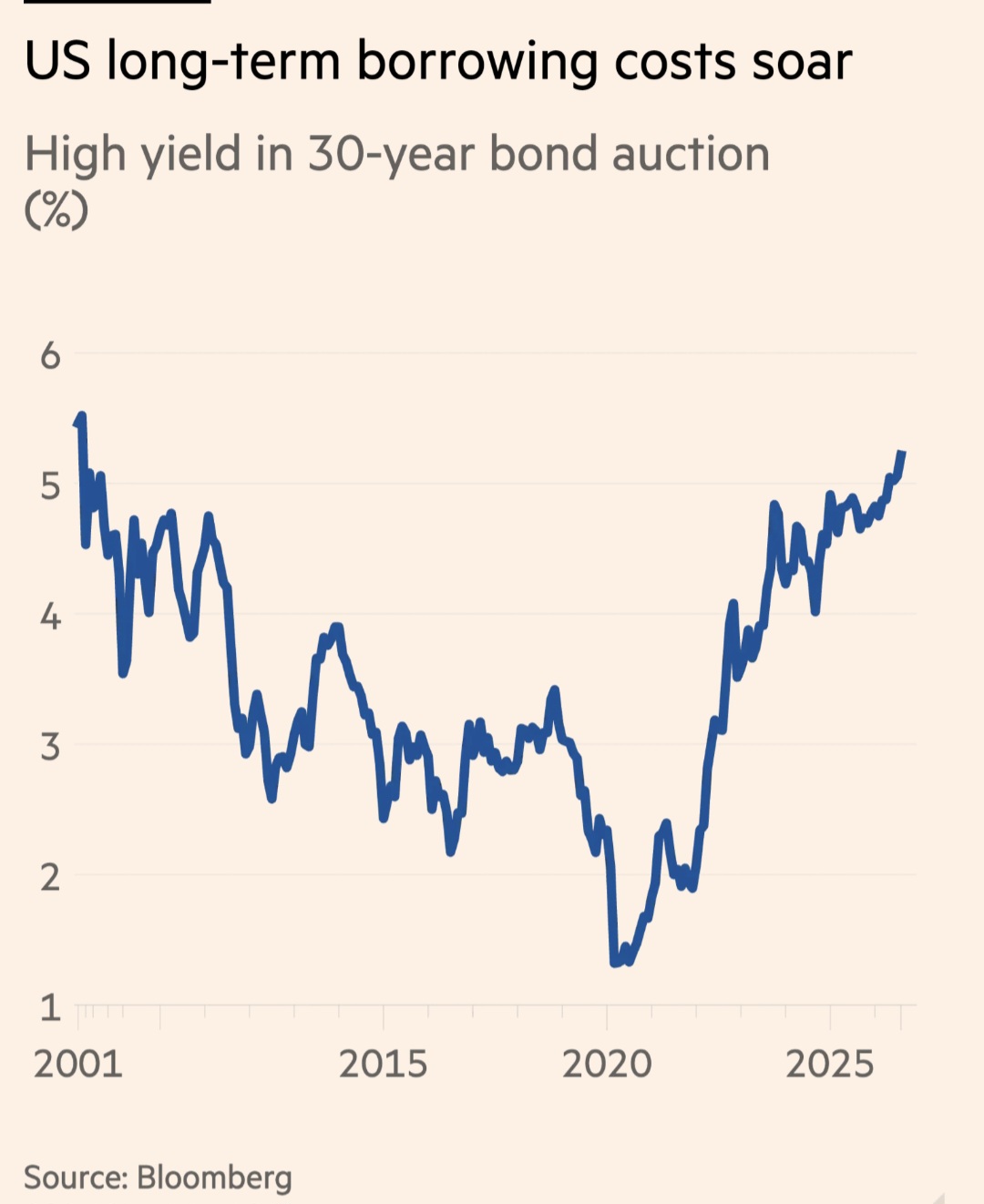
I’m sure I’m missing something, but buying current long-dated treasuries with significantly lower interest rates to replace them with long-dated treasuries at higher interest rates seems incredibly stupid.
Then again, I thought not aggressively selling long-dated treasuries when the 30-year was sitting under 3% - and especially under 2% - was incredibly stupid, but I’m also not a super-genius about stopping alleged depressions by flooding the market with liquidity to cover up insolvency issues so they linger for years and years after, just with additional expenses on top.