President Donald Trump announced an agreement on Thursday to extend the current 25% tariffs on certain Mexican goods imported to the United States for 90 days. That means the higher 30% tariff that Trump had threatened will be pushed off for at least three months.
Trump said he and Mexican President Claudia Sheinbaum had a discussion on the phone earlier in the day.
“I have just concluded a telephone conversation with the President of Mexico, Claudia Sheinbaum, which was very successful in that, more and more, we are getting to know and understand each other,” Trump said. “The complexities of a Deal with Mexico are somewhat different than other Nations because of both the problems, and assets, of the Border. We have agreed to extend, for a 90 Day period, the exact same Deal as we had for the last short period of time.”
Puzzled by Bessent’s comment on negotiating with Canada on aluminum tariffs: it is the US tariffs that are the problem!
“I believe that the Ford F-150, 250 — their big truck series — is made out of aluminum instead of steel, which is different than other cars. So I think maybe the aluminum tariffs hit them harder. We will be negotiating with Canada on those,” Bessent said in an interview with CNBC.
Both steel and aluminum going into the U.S. have been subject to 50 per cent tariffs since June.
This is the hallmark of this administration’s tariff policy. They create the problem and then “negotiate” a partial solution to the problem they created and then they take credit for the result. Very non-productive.
One could conclude they didn’t think through beforehand or were unaware of the obvious negative consequences of some of their actions……
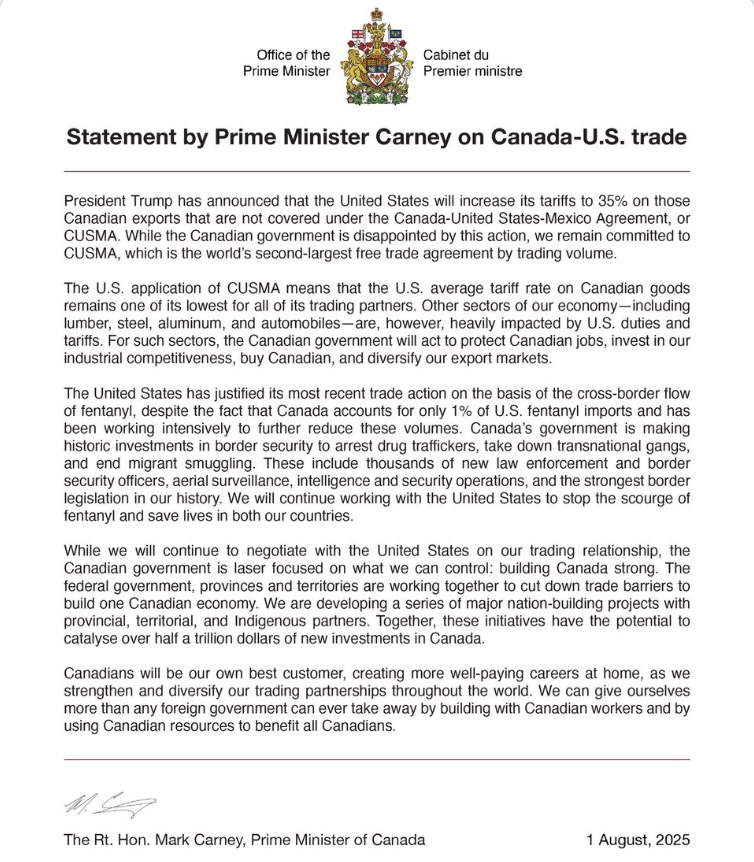
These sector tariffs on steel, aluminum, etc., are the tariffs that hurt Canada most as they are not exempted by CUSMA/USMCA. However, historically it has been hard to counter the US national security rationale for these particular commodities.
These particular tariffs also hurt the US industries that buy these products but that seems not to be a consideration by Trump.
One of the things in Trump’s favour is the time lag between when the tariffs are put in place and the time when prices actually increase to the consumer. Many companies stockpiled and others are suffering short term losses before raising prices. Trump’s strategy, which has worked, is to get some deals in place and the tariffs cemented in place before consumers see the true impact.
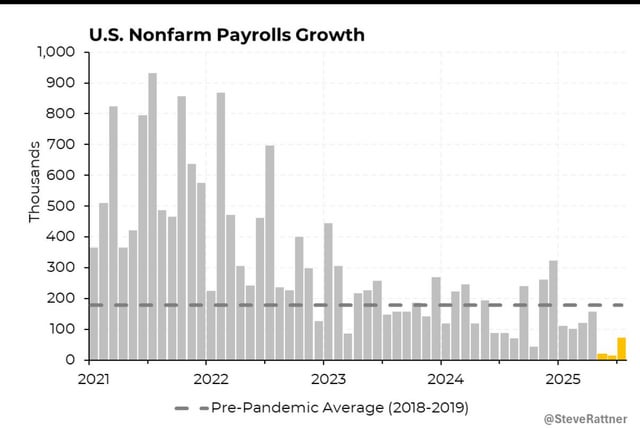
I saw an article recently talking about I think the economy and as far as things are going, despite all the insanity, things are actually poking along pretty good in the US and Canada. There’s really been no indication of the horrible downsides that one might expect from all of Trump’s meddling.
And there is no “deal” yet until that happens. The only thing they have is an understanding which France, Germany, and Italy are very angry about. They will negotiate hard now for sectoral exemptions. If they don’t get some of them, they can easily tank the agreement.
And Switzerland just got hit with 39% tariffs. They are also very angry.
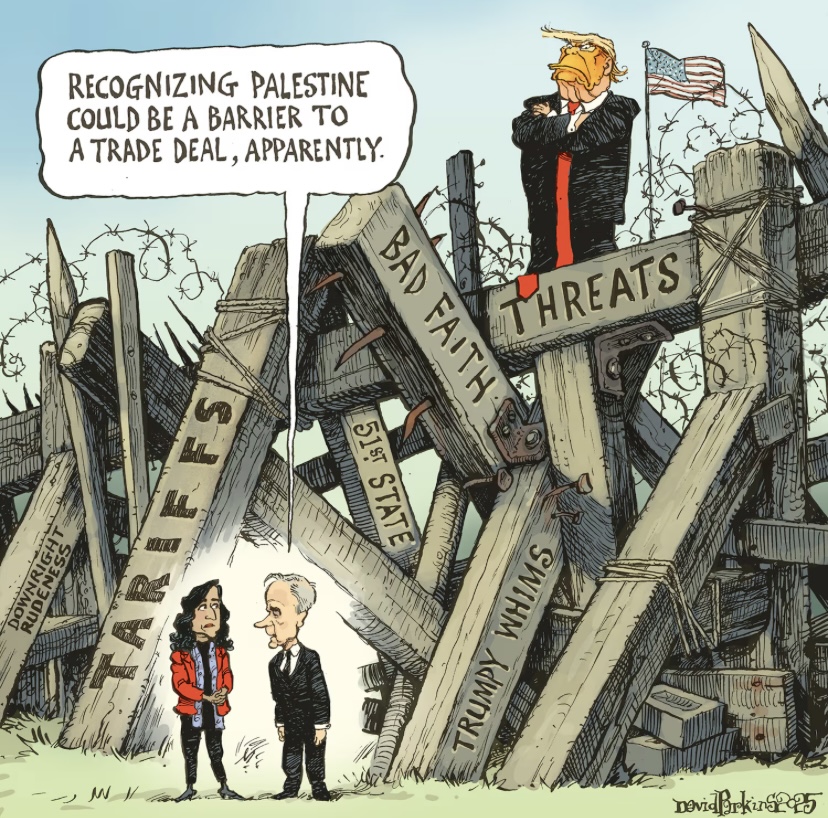
Trump should write a manual on how to piss off your friends because he is a master at it.
As tariff revenues increase, I was pleased to see the following caveat in the Fox Business article.
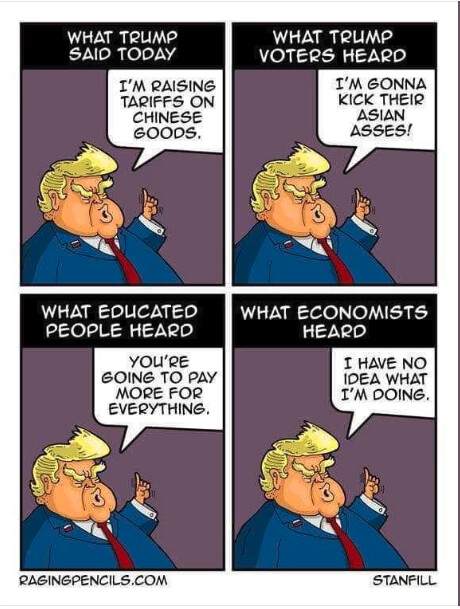
American businesses pay these import taxes to the federal government, but the cost often falls on consumers, as companies raise prices to offset the economic burden.
Eh. “Often” is appropriate. I mean, companies say their profits are dropping due to tariffs, so these companies are paying part of the tariffs in some way, shape or form.
I would have written, “The cost mostly falls on the consumer…”