I keep coming across, via both personal, first-hand experience and via the media, stories about extreme wealth. Specifically how it is distorting the general economy that I once knew. So i am going to post a few examples here, and I welcome other thoughts or examples you’ve noted, and how this strikes you emotionally and/or intellectually.
I see it shaping all sorts of goods and services. I hope we could all agree that a primary issue wrt economics is “How are we utilizing and directing our resources, be they labor/time, water, energy, or raw materials and land use?” Just the old “guns or butter” question, really.
Additionally, I will constraining myself to capitalist systems. In a capitalist system the “value” is determined by the highest bidder. So imagine someone wants to build a home and are prepared to pay $850,000 while another party bids $1,200,000. You’re simply not going to win that auction. You shouldn’t blame the greedy developer. It’s a systemic design, nothing deeper than that. Neither the builder nor the bidders are evil. Its just the system design.
Today, the top 10% of earners are now responsible for about 1/2 of all consumer spending. That is a clear signal about where the country’s resources are going. The middle class and its needs are becoming less and less relevant. The frustration and anger is palpable now.
I’ll start with pointing out just how big the difference is between the average citizen and the ultra wealthy. Lets look at Mackenzie Scott, nee Bezos.
The Yahoo article below has the title “Jeff Bezos’ ex-wife Mackenzie Scott donated $26.3B in 5 years — yet she’s richer now.” The gist is that even with a dedicated staff, she cannot manage to avoid growing wealthier. Can’t give it away fast enough
Two thoughts here.
First is just how much money (power?) $28bn actually is.
Second there is the pretty clear example of how she and her lawyers did a pretty good job of assessing the value of Jeff Bezos in the process of coming to the eventual divorce settlement. How frequently we are told that it is impossible to assess the value of wealth for the ultra wealthy. Well, she seemed up to that challenge, so impossible is off the table.
I’ve also heard that philanthropy from the wealthy is a reasonable proxy, perhaps even a preferable one to democratic governmental allocation. Now, I am sure she is a wonderful person. Full of good intentions. But in the end, it’s her values that will be expressed and no one else’s. It’s her causes and concerns that get the resources. They may or may not be in alignment with the society’s needs or wants.
I travel some, mostly by air. Not as much as some others here, but enough to note the changes recently.
The first is at the airport. For a few $s, you can “skip the line” at TSA. There are literally two queues, one for the those who can pay the “membership” fee and one for those that cannot afford to do so.
The on the plane itself, I’ve noted the expanding front of the plane. And that simply reflects the fact that those seats have higher margins than the economy seats that follow. The Mckinsey article attached goes into more detail.
The link goes into into excruciating detail, full of charts and graphs in PowerPoint style. (Its McKinsey…what did you expect?)
But the upshot is: In days past, the front of the plane pricing targeted business travelers, who were less cost conscious and booked flight later than the leisure travelers. That has changed. The back of the plane is important to cover the fixed costs like fuel and maintenance, but the profits are up front.
" Evidence of the potential for premium growth is already visible in some airlines’ fiscal year 2025 reported results: Delta Air Lines’ premium revenue grew 7 percent year over year (while main cabin ticket sales fell), and United Airlines’ premium revenue grew 11 percent year over year, with both airlines noting that they achieved this growth against a backdrop of softening economic demand. In Delta’s case, premium revenue exceeded main cabin revenue in the fourth quarter of 2025 for the first time ever. A recent Wall Street Journal article cites research indicating that “since January 2020, the number of scheduled business and first-class seats on domestic flights has grown 27 percent … nearly three times higher than scheduled economy seats, which rose just 10 percent over the same span.” Meanwhile, premium margins are strong: In 2024, for example, Delta stated that margins in its premium cabins were 15 percentage points higher than those in its economy cabins.
On my local reddit forums, people making $200+k/yr are considered by many to be fabulously wealthy. $500+k is considered by many to be unconscionably overpaid.
My cousins (who are sisters) had a blowout fight because my cousin who was working retail at the time and making $30kish thought it was madness and completely unreasonable for teachers to be making $100+k/yr. My teacher cousin took great offense on that, particularly given that her sister knew the number of hours she was working and how little sleep she was getting.
I think the concept of the k-shaped economy makes sense, but I’m not sure that it adequately captures the dynamics. You talk about billionaires, but I think for most people the divergence happens somewhere between $100k and $200k depending on your family side. Then there’s another split at an amount higher than that where they are just becoming exponentially wealthier than everyone else. I’d guess its somewhere above $15 million.
Of the regular posters in political, I’d guess I’m in the bottom 20% for income. I can afford to fly paid premium economy occasionally, but I also don’t have a spouse or kids. I’m friends with a single mom who makes about $10k-$20k less than me and she’s able to do stuff, but I know that her budget is also pretty tight. On the other hand, some of it is personal constraints she’s put on herself in handling some family support she’s getting.
Short term rentals have placed a floor on the value of housing in an area.
Subscription fees everywhere
Continued migration from rural areas to cities 75%->80% in the last 30 years
Social media distortion - people aren’t poorer, they just realize it
There is a real allocation of 30 years of GDP growth almost exclusively to the top 10%, and a new economy that is competing for their money. I am less convinced that lifestyles of the bottom 50% are worse now than they were 30 years ago though, I think much of that is perception. There is just more awareness of what the top 10% has, and that top 10% has a whole lot more to show off.
“Expanding the front of the plane” is a good example. I’ve saw that recently.
I posted one a few months ago. NYT article about two families experiences at Disney. One just bought ordinary tickets. The other did some version of an express pass. Dramatically different days.
Back in the day, everyone stood in the same line. Maybe ultra rich got personal Disney guides who took them into back doors. But, the rest of us never noticed.
Now, it’s in your face. You’re standing in line while this intermittent stream of people just walks around you with their passes.
Presumably, Disney knows that makes the experience worse for most people because they are waiting longer and have the indignity of being told they are just steerage class. But, it makes the experience better for the minority. I’m sure they have crunched numbers and decided that the can get more revenue from the few than from the many, so go with it. The rich simply have that much more money to spend.
We’re also just a handful of years away from when the first wave of Gen X are due to retire - a generation that has far less defined benefit pensions than the previous one. I don’t work in pensions but it would be interesting to know if there’s a significant dropoff in retirement funds.
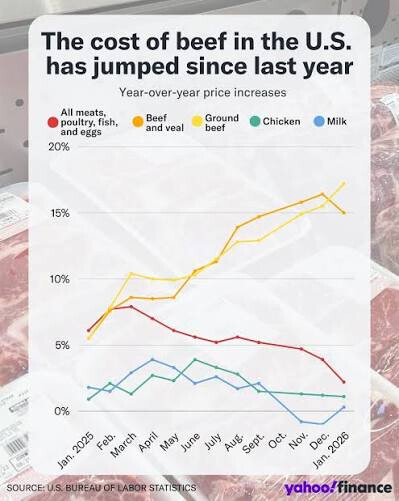
I’m hearing from an awful lot of people who used to be able to afford to buy meat as a major part of their groceries who can no longer afford to do so. I’m not sure that it’s social media making them realize they’re poor.
Agreed that meat is costing a lot more these days. Probably best to cut down on quantity anyways. Or buy shittier meat and make chili out of it. The top stuff is crazy high. Bought a Prime-grade standing rib roast at Wild Forks the other day. $15/lb, which is not too bad. But Snake River Canyon and stuff like that? That is at my local store and $30+/lb.
The economics of this should suggest an overall cost subsidization that has lowered the cost of entry for others (the same ride has the same throughput and cost, regardless of ticket price structure). I am not a fan of what Disney has done with this though, as many families stretch to afford taking their kids once while they are greowing up, and they should have an equitable experience with all the rich kids.
Tracking with beef costs in my experience and exchange rate. Chicken and pork have stayed relatively steady after post-COVID stabilization. Only notable change is increase in chicken wing cost relative to other chicken parts due to increased usage as party wings.