Trump (and many other US politicians) doesn’t believe in the need for water conservation.
It sounds like this may bite Corpus Christi in the ass around November.
It seems like the city plans to rely on groundwater and desalination plants. I’m sure they’ll enjoy the effects of groundwater depletion. Also, good luck tax payers, I suspect they’ll be subsidizing multi-billion dollar companies.
Anyway, feel free to share other water shortages stories in the US here. I suspect there’s lots of good stuff to share from California, Arizona, Georgia, and Texas among others. Also the Colorado River Basin.
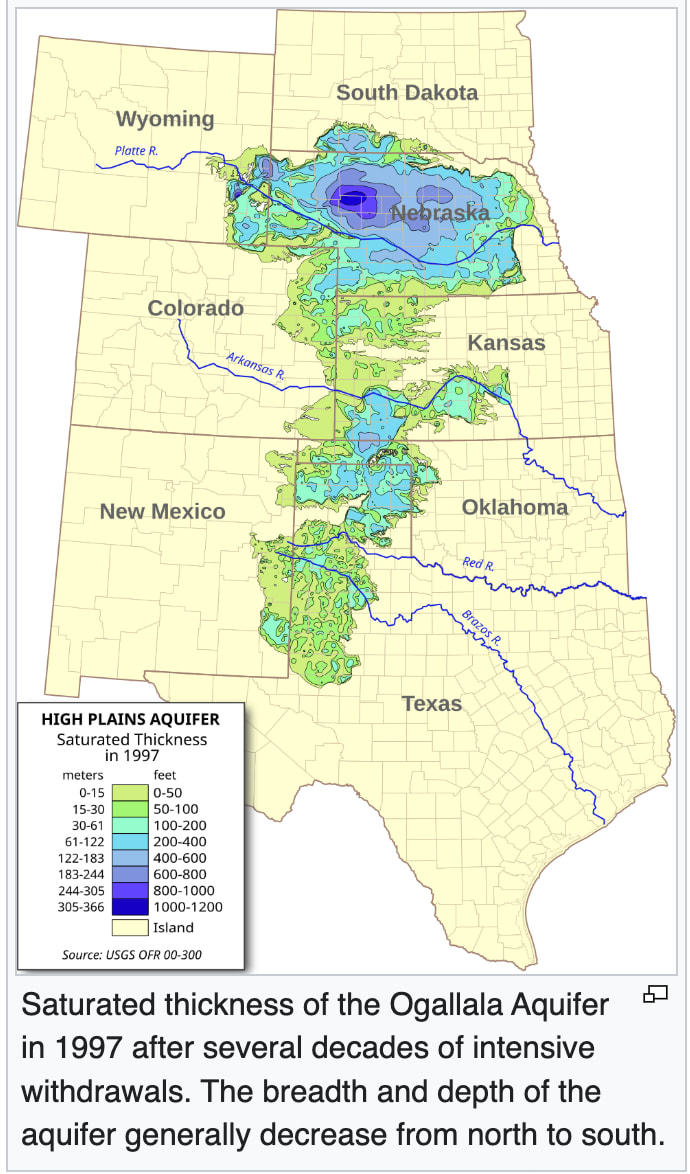
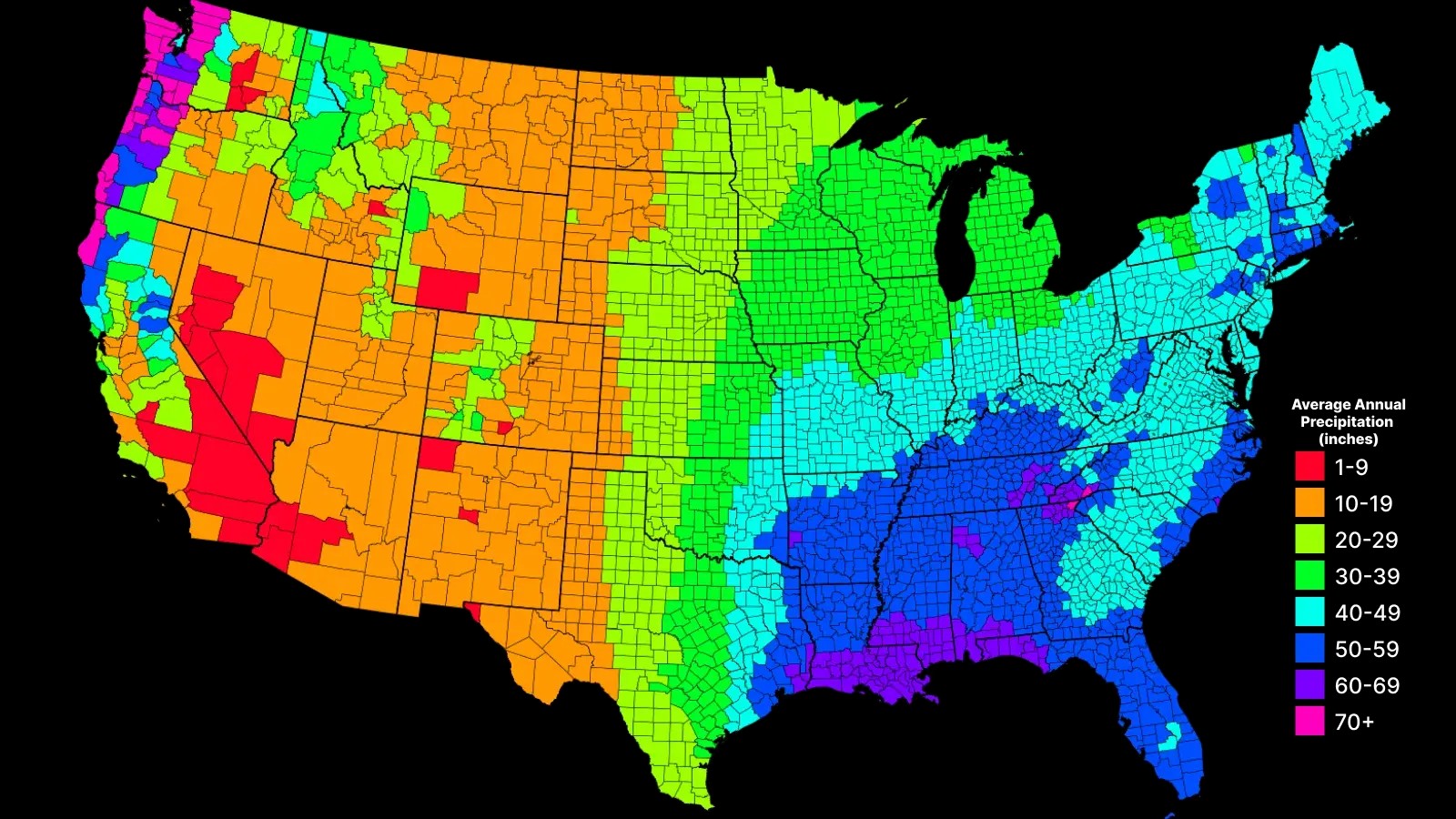
Droughts and industrial pollution are somewhat local/short term issues. The real problem in the US is that the Ogallala Aquifer is consistently being depleted - this is the massive underground water table that supplies much of the western plains with water for irrigation. This is why fields transition from square plots to circles the further west you go across the US - rain is not sufficient for crops to grow, so they dig wells, and pull it from the massive aquifer.
This will one day dry up, probably in the next few decades. It won’t be all or nothing, but incrementally, wells we go dry, and those fields will the collapse into dust bowls, until the viable farmland retreats back towards the Mississippi. Anything West of Iowa and Missouri may become unproductive.
They are still systems that have a chance at be replenished or managed, at least until we acknowledge the climate models have permanently altered what the basin is expected to collect.
The Ogallala aquifer is non-renewable, it takes thousands of years to refill.
Trump thinks that a spigot can get hooked up to Washington state. Apparently, he doesn’t realize the PNW has also been subject to drought conditions. He also seems to think that water flows from north to south.
Columbia river. The US position is "hey, Canada, we would like you to flood more of your land and coordinate with the US on water releases. Just in case we need the power and water here, downstream. For those unfamiliar , eastern Washington and eastern Oregon are deserts, albeit they have a lot of agriculture. Sorta like the Imperial Valley. The PNW needs the flow to be level, since hydro power is king there.
The US is offering a big hug and a hearty “thanks neighbor”.
I said it in another thread. The future is all about water and energy.
During the California fires, Trump thought there was some spigot in Washington that could be opened to send water to CA and that WA had more water than they knew what to do with. Yeah, that’s a no all around.
Water and energy are basic needs, that’s for sure. It’s interesting that my college-aged kid has personally noticed the change in the local climate in his lifetime.
Very interesting. It covers 8 states and about 27% of the irrigated land in the entire United States lies over the aquifer, which yields about 30% of the ground water used for irrigation in the United States.
However, in some places in the Texas Panhandle, the water table has been drained (dewatered). "Vast stretches of Texas farmland lying over the aquifer no longer support irrigation. In west-central Kansas, up to a fifth of the irrigated farmland along a 100-mile swath (160 km) of the aquifer has already gone dry."
Even if the aquifer can be replenished, 30-40 years would still be close to a person’s entire working career. That’s a long time to deal with a drought and would potentially kill off a lot of farms/communities.
We probably need to think about this as two different issues. 1) Policies around expanding populations in areas that have a heavy reliance on infrastructure to provide water and 2) How to deal with the tail situations that will occur in any situation.
The US expanding into the desert in many cities. This is states competing with states to draw in more residents to expand the tax base. They aren’t being held accountable for providing a long term solution. Long term droughts will happen, and areas with low annual precipitation are likely more susceptible.
This still feels different from the issues that will continue to emerge with the Ogallala given the time horizons involved, but its all the same issue #1 above, with expanding populations in the wrong areas.
Without any doubt.
The first challenge will probably be how to get states to act collectively. Water doesn’t really care about state boundaries. The aquifer, and virtually all rivers, just are where they are. Whatever the solution, we cannot have states competing for the water.(well, given the shit-show with the Colorado, I suppose it’s a known thing to avoid.)
As proud as Americans are of their beloved Constitution, it’s going to have to change radically. This year there will be all kinds of self congratulation about 250 YEARS! That’s all well and fine, even if the actual birthday was in 1787… but it underscores the tragic flaw of the US today. While its people adapt and reinvent. The government does not. History is clear. Cultures and civilizations that cannot adapt, that have little resilience, soon turn to dust.
I’m not sure we’re talking about tail situations in many cases. We’re talking about system behaviours that are well within the center of the distribution, but the people who settled many of these regions e.g. the Colorado River Basin didn’t fully understand the system dynamics. In other cases, the system as a whole has shifted with climate change and water losses are now out pacing water gains for a greater portion of the year.
ETA: Florida and Louisiana are an entirely different situation where salt water intrusion is poisoning water supplies in those states.