Allegedly I learned. I did a lesson, and did it completely correctly. But I had almost no idea what was going on. Almost all of the questions were “filll in the blanks”, with just two blanks and two words, (which could be used twice, even if I wanted to). So it amounted to which word went in which blank.
They were all on a topic I had seen before, but which also hadn’t been explained then: “compounding” a verb with the object pronoun(s). And in all these cases, one blank always had the object separate. In fact, in each question the form with the object separate was the first blank. (That was somewhat necessary, so that you would know the antecedent in the compounded version). But I frequently had no understanding.
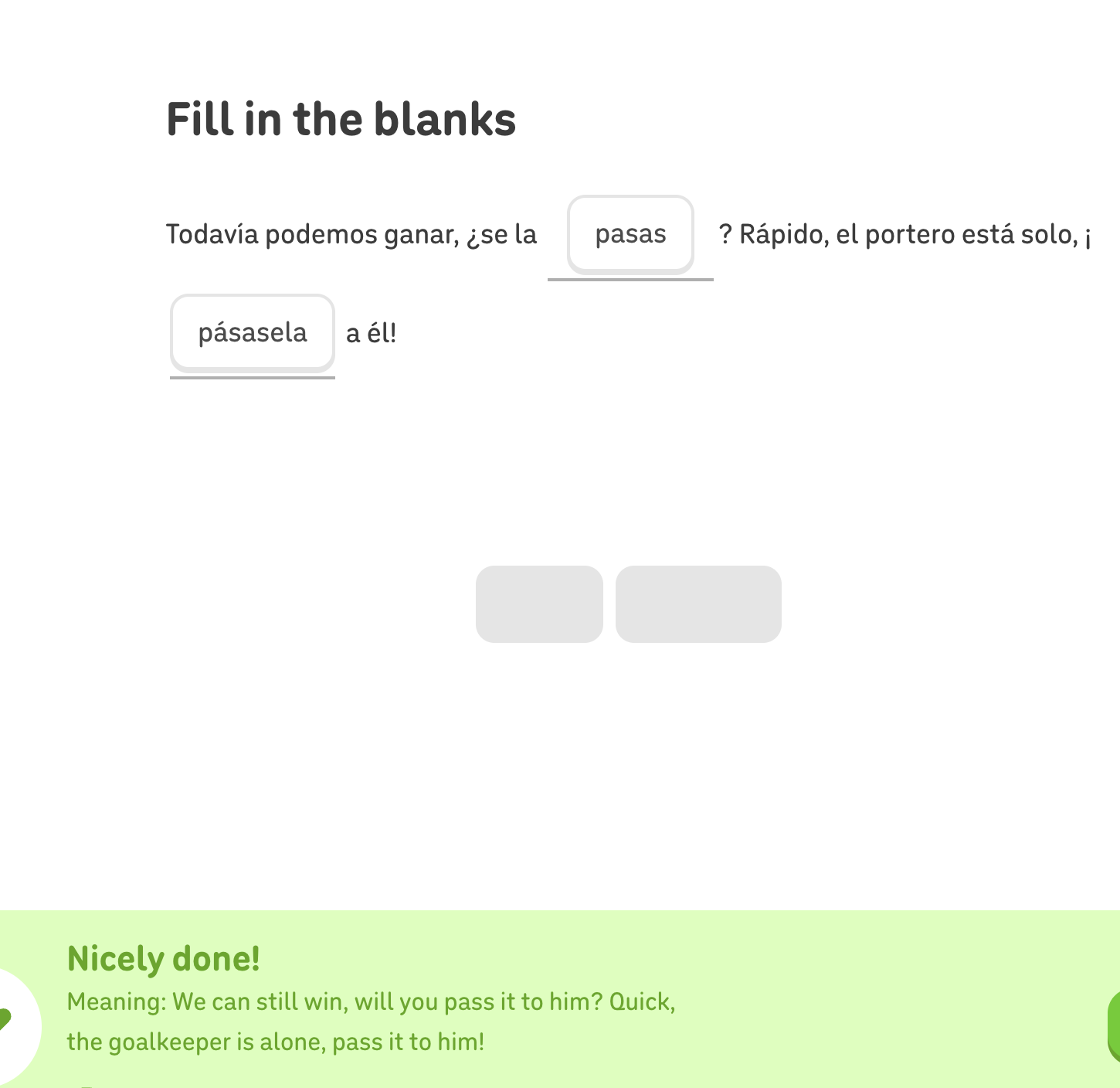
That one I understood somewhat, but in the first sentence is “se” him and “la” it (referring to la pelota, the ball)? And is it just soccer knowledge that in the second sentence, the “him” to whom it is passed is your teammate, not the goalkeeper?
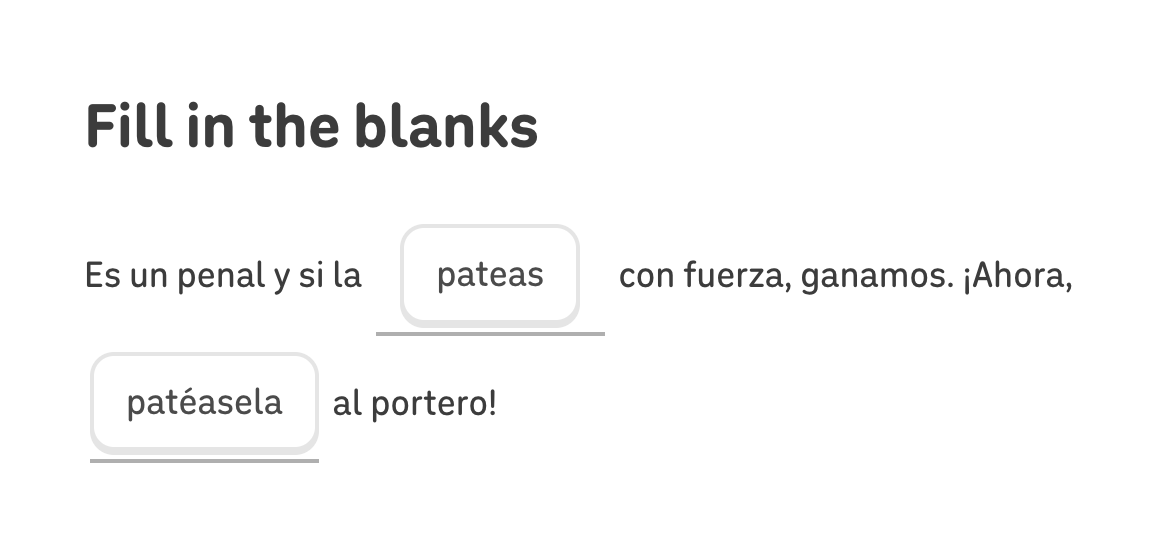
Oops. I didn’t same the translation. What are the components of the compound verb, and what does it mean? (I think it was the “se” that was most confusing, though I was separately a little confused by “al pertero” vaguely feeling that should be “to the goalkeeper”, which is certainly not where you want to kick it.
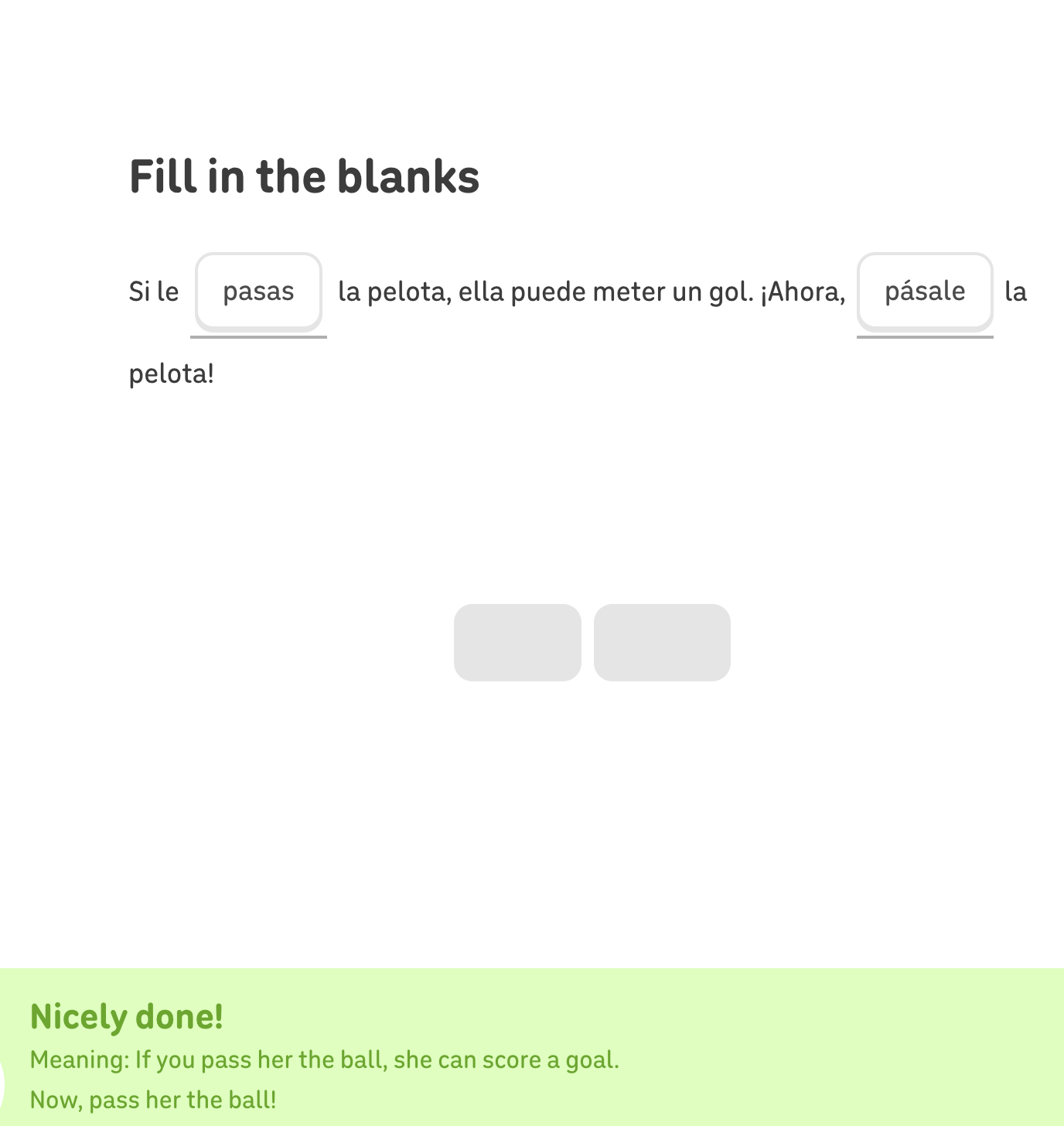
Until I saw the translation, I was confused by the “le passs” expecting (maybe from some ancient French influence) that it would be “pass him”, and then wondering how she could kick it. So is “le” here an indirect object that can mean either "him’ or “her”?
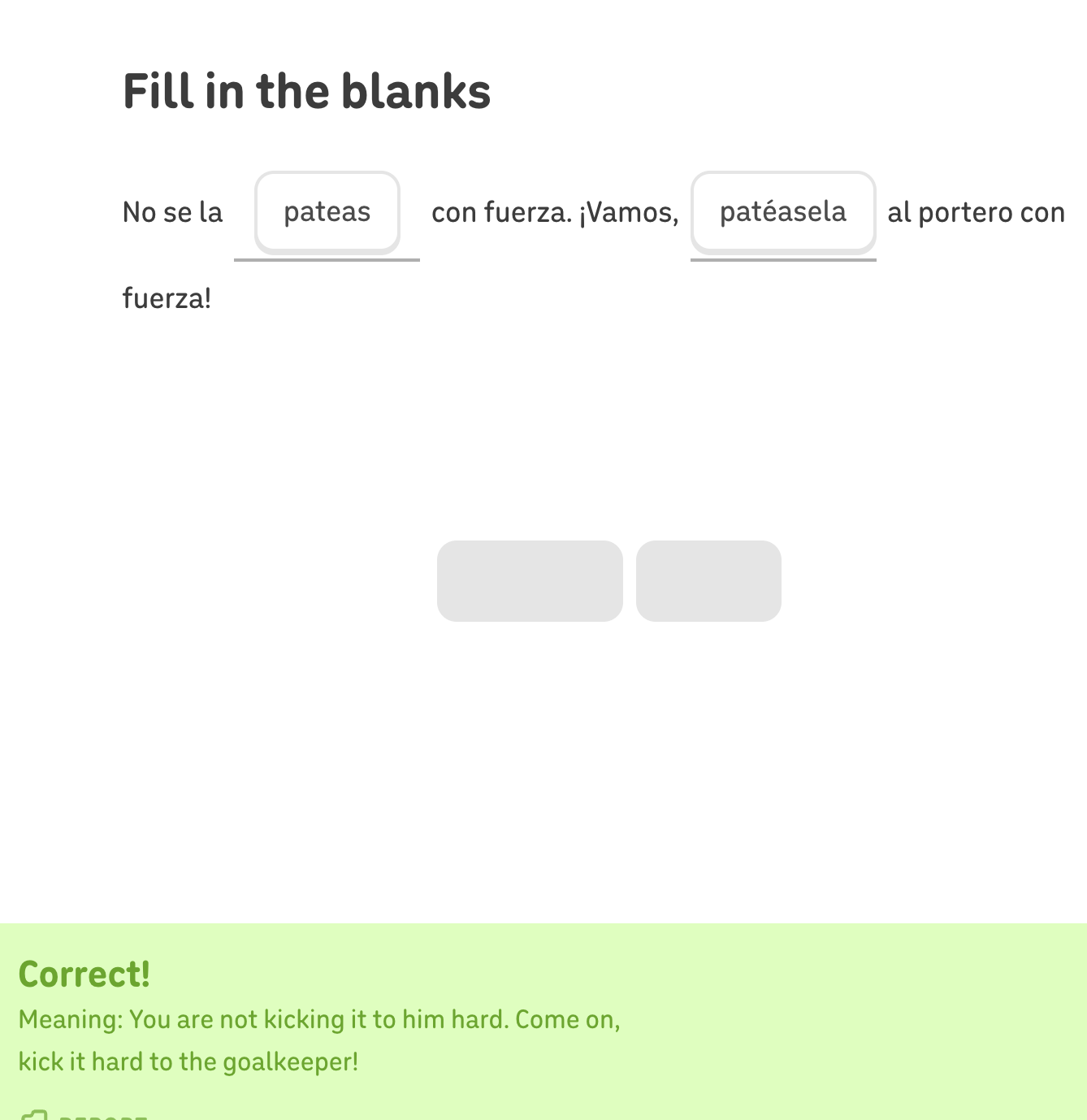
Again, I’m not really understanding “se”, either separate from the verb or compounded into the verb. And is the intent here that we are kicking the ball to our own goalkeeper or past the opponent’s goalkeeper?
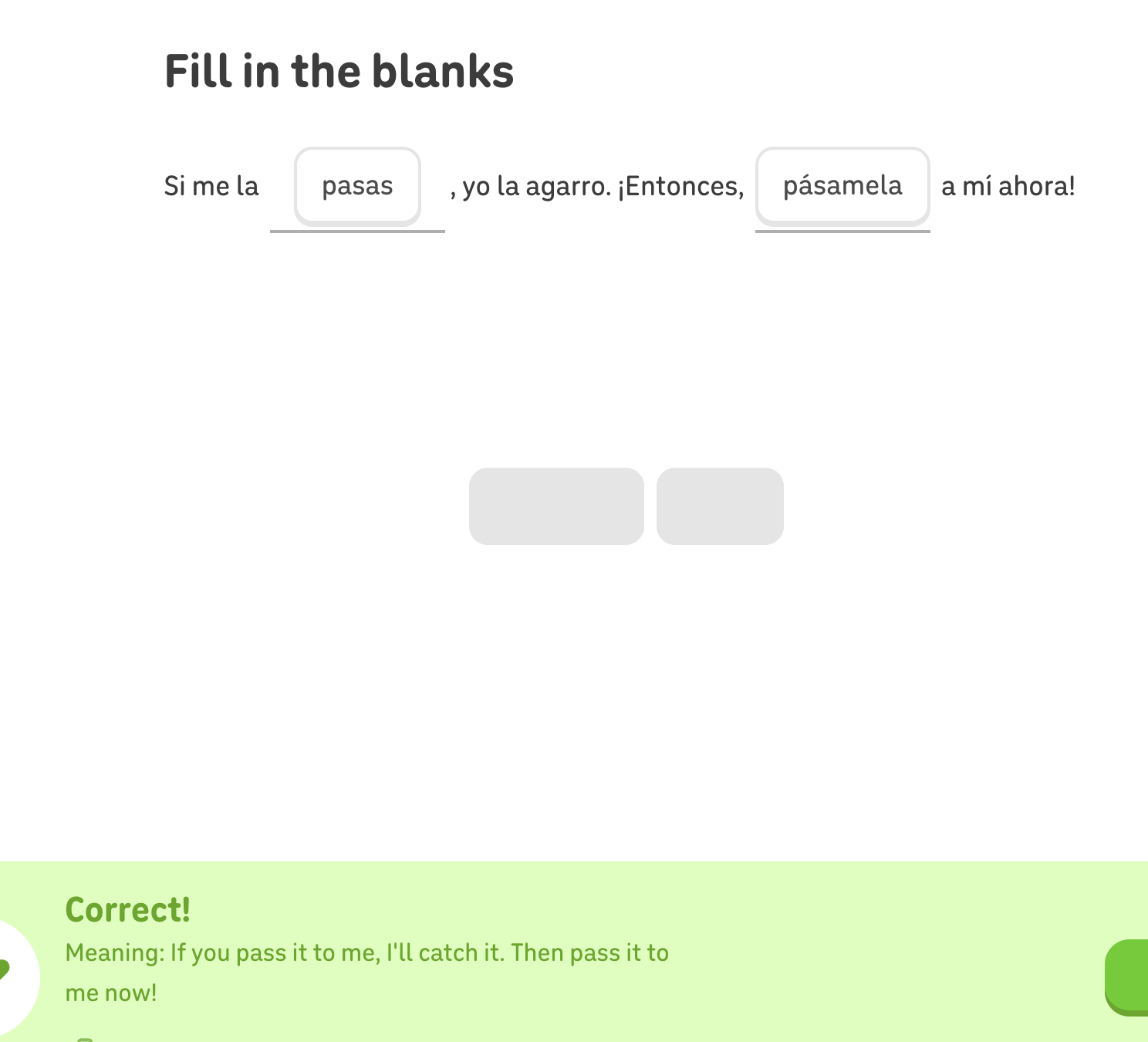
I actually understood that one pretty well. But “will catch”? Is this future tense? Or present tense but future meaning (at least in English)?
Gracias.
Like I said, all correct, but at least 8 compounded verb + object, none of which I could have compounded if they had just given me to English and asked me to express it in Spanish and some of which I didn’t even understand after being sure which of the two given Spanish words I wanted. This after over 1000 lessons (normally only one lesson per day).