My doctor mentioned that the biggest concern with using GLP-1 is losing too much weight too fast (note that I believe the actual amount pound-wise will vary by individual and their weight-loss needs) because the muscle mass isn’t “keeping up” or there’s a perception (by the public) that increase in muscle mass shouldn’t correspond to increase in weight.
General rates of anorexia in adults is 0.5% without GLP-1. If you remove some of the biologic hurdles to consume enough daily calories from a subset of the population that has been overweight for many years, does that lead to an increase it rates of anorexia?
Sure, the drug itself is not addictive, its whether or not the response to weight loss is. Also, I guess I would question whether or not there is anything in the system that would prevent someone from shopping around multiple pharmacies to get the drug. Opioids are controlled substances that should have higher monitoring, and they were still systematically abused.
GLP-1 meds are expensive in the US no? (If prescribed via insurer or paying out of pocket)
Thats probably a limiting factor in terms of that type of abuse.
I suppose its still possible to get it via compounding pharmacies (vs brand name pharma) so that could be one avenue where you might see higher levels of abuse.
I think that you would have be taking quite a high dosage in order to really squash hunger if your BMI was very low. The GI effects would probably be pretty bad (nausea and gut motility).
Predictably, the oral versions of GLP-1 drugs are nowhere near as effective as the Sub-IQ ones.
Results of Lilly’s oral drug Orforglipron:
I don’t look lopsided in person, and most of my lifting is focused on leg and glute workouts, but as a woman, I only have so much to even work with without steroids. My family genetics don’t offer much in that department.
I don’t have Ozempic face, though, which I’m grateful for.
1 Like
Compounding is far more restricted now that the FDA has determined there is no longer a shortage. There are pharmacies still doing it, but they’re having to compound with other drugs, like B12, and those produce more side effects in some people.
Many have turned to the grey market and are obtaining research peptides. I suppose that shows you how desperate people are to get healthy. If you browse the reddit subs on this subject, it’s full of people who have spent a lifetime trying to lose weight and this is the only thing that has been successful for them.
In the US, I believe that the highest dose available is 2.7 ml/dose (weekly shots).
Other doses (at a “maintenance” level) are 1.0 and 1.7.
I am currently struggling through an awesome (Zepbound 7.5mg) side effect where if I do too much cardio there’s a buildup of gas in my stomach and if it doesn’t come out as a burp it will turn into full blown I-need-to-throw-up-immediately. It’s happened twice at dance class - once I made it to the bathroom - once I did not. I’ve taken to sitting down every few minutes.
I tried actively drinking more water/electrolytes (I’ve also been getting dizzy spells upon standing up), but it seems more food related; like if I don’t eat well directly before cardio I’m more likely to projectile vomit on the instructor. But it’s scary to put more in your stomach knowing you might projectile vomit on the instructor.
Anyways, whoever said losing weight on these drugs was easy was surely misinformed.
If anybody is interested in the science of why Tirzepatide makes it easier to lose weight for people that are overweight/obese, the evidence points to the interplay between having high levels of visceral fat and its effect on adiponectin levels. Tirzepatide targets visceral fat loss due to its GIP receptor agonism.
A person will have sub-cutaneous fat and visceral fat. But how much of each is determined by genetics (your fat distribution pattern) and your environment (the food you eat). Eating UPFs and also combining that with HFCS food (its in many things now not just soda) creates an environment were people gain increasing amounts of visceral fat over time.
Brief AI Summary here:
I believe genetics plays a big role in one’s susceptibility to food addiction. I would literally have to force feed myself to become obese and I think that applies to most people in my ethnic group. I think genetics just makes it easier to not want food beyond our energy expenditure.
If alcohol is an appropriate analogy, some people are just prone to becoming alcoholics and cannot have even one drink or else that will send them down the deep end of having 12 drinks a day or something like that. Whereas I can probably have a couple beers during a night out and not want any more for a few weeks no problem.
Likewise, I can eat cake or have a soda but it won’t make me form a habit to drink 12 cans a day whereas somebody prone to obesity might, and it’s just the way it is that they have to make a commitment to swear off those foods forever whereas eating that stuff in moderation isn’t a problem for me.
On the other hand, I’m pretty sure my genetics would make me addicted to cigarettes so I have to avoid smoking no matter what. Even having 1 would be a big problem. My peoples are chainsmokers. I have luck to thank for being born in a time in place where anti-smoking campaigns and policies are active.
So yeah life is unfair. What’s easy for one person to not do (become fat) may be excruciatingly difficult for another.
1 Like
I suspect it is a combination of genetics and the addictive food we have created. I noticed that junk food could help alleviate any cravings I had for alcohol, and people often crave greasy foods after a night of binge drinking - those reward centers in the brain respond to both similarly. But there are generally social pressures and boundaries that exist with alcohol that don’t with food, donuts are a perfectly acceptable thing to have with a morning coffee. It doesn’t take much to tip the balance of calories against someone. Encouraging overweight people to eat better is fat shaming at the same time we judge people who quit drinking alcohol.
Step 1 with addressing a drinking problem is to get it out of your life. It’s harder to do this with food, especially with other family members in the house unless everyone is going to commit to a clean eating lifestyle. Then you have the problem of food everywhere when you leave - junk food at the office, vending machines, etc. For me personally - I know once I grab a piece candy from a candy dish at the office, I will be back day after day for more, I’ll be hungrier and make worse choices for lunch, and suddenly a small calorie deficit turns into weight gain. It will take a few days of hunger while skipping the snacks to get back on the wagon.
This effect never happens with real foods though. I’ll take a few pieces of fruit with me to the office. If I am hungry and tempted by a snack that I see, I at least have something I can turn to that won’t be an issue. I won’t have them every day though. If it was a bag of junk food, I would almost certainly have it daily.
People in the UK are freaking out over this massive price increase for Mounjaro. By 170%!!
Trump is doubly-hated now as he nudged this along.
This is going to price out a big chunk of people that pay for it privately.
Apparently, between 8% and 10% of Americans are now on GLP-1s. Had no idea the numbers were that high in the US (thats 30-35 million people)
I’m fairly certain these numbers are %'s of US adults, not all Americans. But still a lot.
The article states that Serena “tried everything” to lose weight; however, it only mentioned her extreme exercising and did not mention shifts in nutrition. If there was anybody in the world who could truly “try everything” to lose weight, it is Serena. I would like to know if she consulted weight-loss nutritionists in her attempt to help combat her weight. Otherwise, working out only goes so far.
1 Like
30k steps a day is 1500 calories. That should be on top of a sedentary 1500 calories. I’d also be curious what “try everything” meant in terms of diet.
Google AI summary:
Serena Williams follows a flexible, predominantly plant-based, whole-food diet rich in lean proteins, complex carbohydrates, and healthy fats, though she doesn’t strictly follow it all the time. She has used medication, including a GLP-1 drug, to aid her post-baby weight loss journey, losing 31 pounds. Her diet emphasizes mindful eating, avoiding processed foods and sugar, with occasional indulgences in Southern foods like fried chicken and grits, or tacos and pizza, especially during the off-season.
Key aspects of her diet:
- Plant-Based Focus: She incorporates a lot of vegetables, beans, nuts, lentils, and sprouted grains like quinoa and chia seeds.
- Healthy Fats: Healthy fats are a key component, with ingredients like almond butter and chia seeds frequently used.
- Lean Protein: To build muscle and for recovery, she includes sources like lean meats, fish, eggs, beans, and plant-based protein powders.
- Complex Carbohydrates: Brown rice, oats, and Ezekiel bread provide sustained energy.
- Avoids Processed Foods and Sugar: She tries to avoid processed snacks and sugary foods in her daily routine.
- Hydration: Coconut water and matcha green tea are some of her favorite drinks.
More information is now trickling out based on studies going back a few years of use and it looks pretty positive to me.
Seems like there a pretty big potential something out there if we suddenly extend life expectancy by a few years. Here are a couple maps to think about:
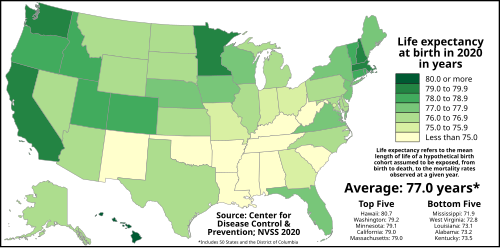

Second map is obesity rate…
I wonder how much of the “life expectancy” map is skewed due to “migration” of older folks in conjunction with an indicator of poverty (in correlation with the obesity map).
By migration of older folks you mean the (potentially) disparate mortality between older folks who migrate and those who don’t?