I have been looking at a few CVs for graduate/experienced hiring.
If she started working at Capital Group (I know a few people there in Asset Management) straight off from school she was probably in the upper tier of graduates.
Don’t know who she is personally, but seems she struck out on her own (self-employed entrepeneur?) after that initial stint.
Being from West Kentucky (very poor area) financial literacy there is abysmal so that could explain why she went into the financial education route.
Humana Inc is an American for-profit health insurance company based in Louisville, Kentucky. In 2024, the company ranked 92 on the Fortune 500 list, [3] which made it the highest ranked (by revenues) company based in Kentucky.
I have to assume there are some financially literate people working in Western Kentucky.
Which reminds me, I wonder what @Nick_Papagiorgio is up to nowadays?
I don’t think OK gets enough respect for how truly awful it is. OKC, last time I was there, was decent enough, you couldn’t pay me enough to live anywhere else in the entire state. And that’s coming from someone who lives in KS, lol.
My in-laws drove like 900 miles to go to that. True story. They invited us. Wait, maybe it was the Noah’s Ark thing, that’s also in Kentucky I think? I don’t care enough to google it.
YouTube pushed her to me a little while back and I started watching. She’s generally pretty interesting and doesn’t seem to be pushing anything at all (well, her book, but not much), which is refreshing these days.
Scanlon is an economist, not a stock analyst. I’ve seen her do a couple programs on “The Compound”. She has some interesting ideas, the one that stuck with me was that in many areas housing affordability is determined by the availability of insurance.
The insurance angle does seem like a major issue in wildfire and hurricane prone areas and these high-risk zones are expanding.
I’m sure there must be a paper out there somewhere but could the insurance company do some form of smoothing between zones? Perhaps a blend of both zones depending on how far one is from the center of both zones (or even 3 or 4 zones)?
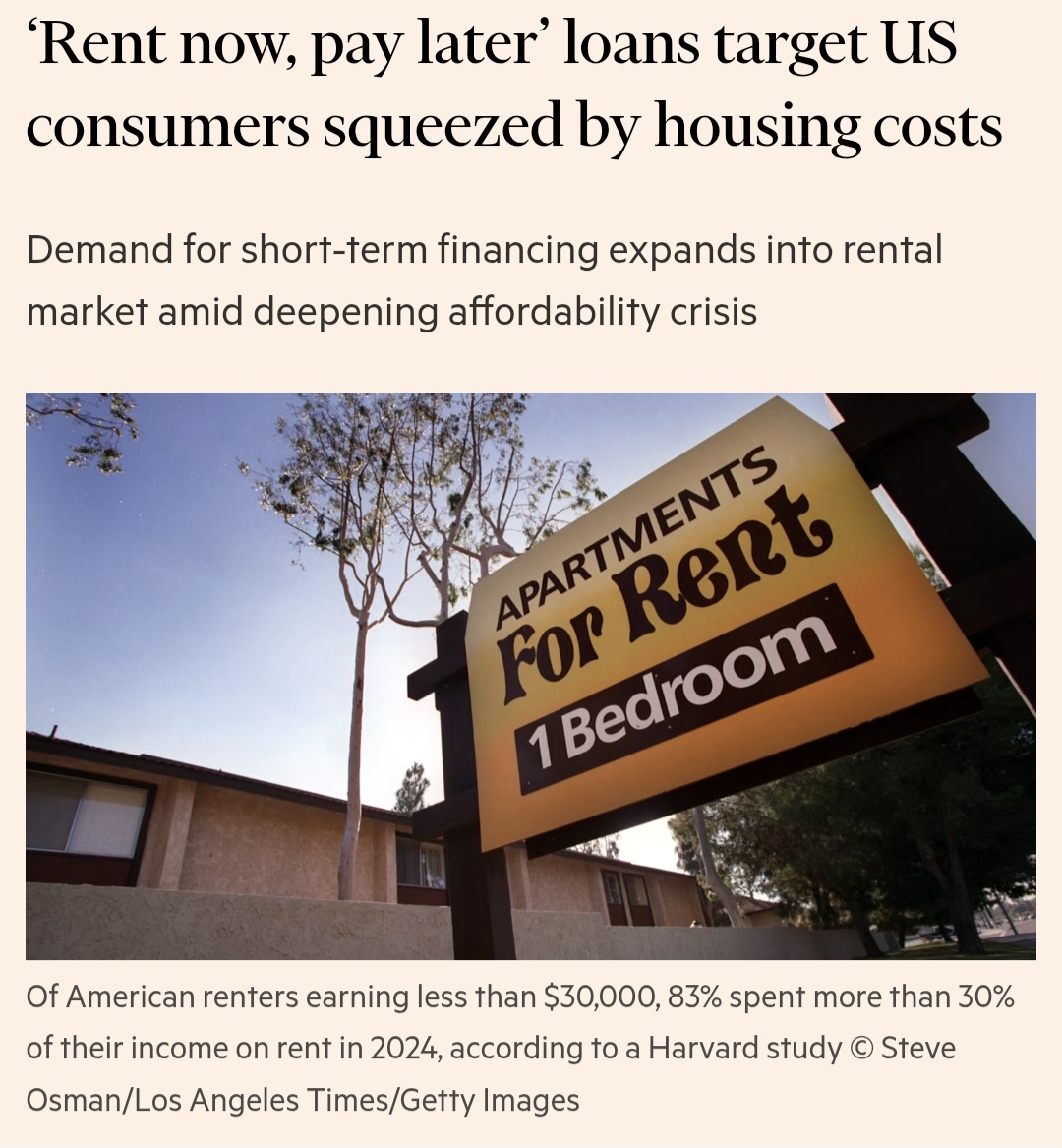
Only the US could come up with something like this.
Tells you that incomes are being severely squeezed in the US at the bottom 1/3rd of the income distribution due to inflation, but that just encourages further predatory lending.
The black swan is the National Debt to GDP ratio climbing nearer to 150%, the US Govt not being able to either pay its debts or re-borrow more, and total anarchy ensuing.