I’m socially liberal and fiscally conservative canadian. I tend to vote right, but am getting more and more reluctant to do so because right generally equates with neanderthal social policies.
Worse, after taking macroeconomics 101 I’m now suspicious that the fiscal policies of the left are in fact a better representation of what right wing fiscal policies should be. i.e. increased spending, increased immigration lead to better fiscal positions nationally and a better life for everyone. I’d just go ahead and vote left, but the left don’t do it particularly well either.
Ontario’s premier was originally branded as a mini-trump when he was elected (right wing neanderthal, populist). But when covid hit, he’s taken a mostly science based approach AND been very bipartisan including becoming good friends with some left wing folks. There’s always criticism, but he actively stepped up and put people before politics. I’m guessing he’ll get elected in a landslide next time.
But that’s really not how it works. First, the COL isn’t the same. But let’s ignore that. The high tax state doesn’t pay for your groceries or your utilities. It pays for better welfare benefits, better maintained roads, and courts that actually get through their docket. It pays for medical care for the poor. It subsidizes schools, and may help pay for special education for the disabled. It may pay for better state colleges (which out-of-state people can attend, and typically can get residency in their second year.) Maybe some bus service. Retraining for the unemployed. Drug rehabilitation.
The only one of those that an employed person, subject to these taxes, can buy on their own is education. Yeah, maybe you feel like you need to buy private school in your low-tax state.
And having higher taxes and better services for the poor and disabled attracts more poor and disabled to the state. It’s the right thing to do, but it’s an act of charity, not “the state is buying stuff for me”.
Doesn’t the federal allowing the deduction of the local and state taxes a person pays from their federal taxable income imply the fed is creating an incentive to increase local and state taxes? With the big assumption that taxes reflect benefits/services provided, then SALT is saying the fed wants more things local and thus less things federal. SALT is a small federal government benefit. Like a federal politician saying “Let the states pay for that. Here, we won’t even tax you on the money you use to pay for it.”
Like so much that is federal it is a backward ass way of doing things but at least it is a step away from federal overreach.
Ugh, I can’t figure out multi-quoting and I don’t feel like re-reading this whole thread to find the posts I want to quote.
Capping SALT hurts people more in high tax states, but it hurts people in every state.
It was a weird deduction to begin with given that you can deduct income OR sales tax but not both. So if you live in a state that has only one or only the other, you used to get to deduct all of your tax. But if you live in one of the states with both, then you can only deduct a portion of your state tax. There’s no fundamental reason that makes any sense… and it still doesn’t because they didn’t fix that oddity.
The cap introduces another marriage penalty, so I’m mad about that. The Republicans are supposed to oppose marriage penalties and then they put in a big one with the stupid way they wrote the SALT cap.
It’s not indexed to inflation, so it will hit more and more “regular people” each year.
I feel like that’s a deduction that actually made a lot of sense. Money that I am forced to pay to the state or local government was never really mine in any rational sense of the word.
So I dislike the SALT cap for a bunch of reasons.
And as Lucy pointed out, most tax money is going to help poor people.
As for the schools, where I live the taxes are higher for the inner city schools than the fancy suburban schools. It’s not about the quality of the schools. The top schools might spend a little more than the inner city schools, but not that much. Maybe 20% more.
The bigger issue is the ratio of property value to kids attending public school. (Some adjustments for kids not attending but otherwise using public school services such as parochial schools using the public school’s bussing, or home-schooled kids doing extra-curriculars and speech therapy and that sort of thing.)
Fancy suburban schools have few kids living in big expensive homes. Poorer schools can have a LOT of kids living in pretty inexpensive homes. So instead of 1 kid per million of assessed value in the fancy suburb, you might have 10 or 20 kids per million of assessed value in a poor area with low property value. The 20-1 ratio of kids per unit of assessed value massively trumps the 20% more that the fancy school district spends.
So the tax rate per thousand dollars of assessed value is often higher in the “bad” school districts than in the good ones.
It will be harder to tease out if the schools are also getting support from sales and income taxes. That can offset the property taxes they need to collect.
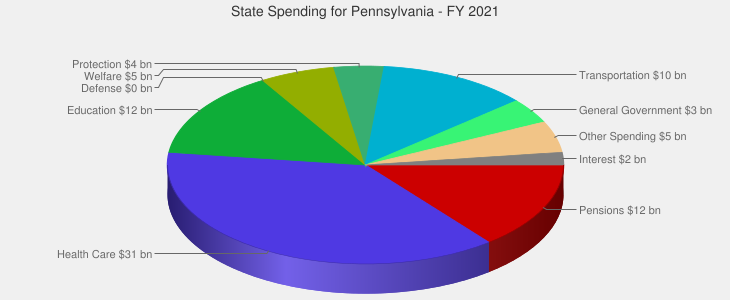
Welfare to poor, apart from Medicaid, is actually no where near a majority of state expenses. It’s about equal to the amount spent on “corrections”. Think 2-4%.
Easy enough to look at your own state, using the interwebs. Local
Virtually all of it is my guess.
Note that is 2021, so it’s going to be higher than usual. The pandemic at all. Gonna be a rough year or two for state budgets, fer sure.
You can look at the budgets by fiscal year broken down by category if you are interested in that sort of thing.
Fair enough, but not that much is directly beneficial to the people paying the tax. Parents in a good school district are an exception.
Certainly not the incremental difference between living in a high tax area or low tax area… very little of that is directly beneficial to those paying the tax.
One exception I can think of: my parents just moved from a higher taxing neighborhood where their property tax covered trash pickup to a lower taxing neighborhood where they have to pay their own trash bill. No particular reason why the taxability of the cost of trash pickup should be deductible.
I’ll guess that the lower income people in the lower cost burbs are in lower marginal brackets. Hence, the SALT deduction is less valuable to them. They’d be better off with a higher standard deduction.
Have you done any numbers for school districts in your area?
Those are all things that people in those high tax places seem to value more than people in the low tax areas. Why should the people in the low tax areas subsidize that extra spending in high tax areas?
Of course! I choose how much electricity to use. I decide what temperature to set my air conditioner at, how many lights I want to have on at a time, whether or not I want an electric garage door opener, what temperature I’m going to dry my clothes, how often I wash each garment, how many dishes I use and whether to run the dishwasher or not.
If I go on vacation for several weeks and turn all my appliances off, I can expect to see a material reduction in my electric bill.
All of those things and more are directly within my control.
I don’t decide when to fix the roads or replace street signs or install a new traffic light or to hire more/fewer police. I am forced to pay for the decisions that government employees (not all elected either) make on my behalf and I have virtually no recourse if I dislike their decisions. My vote is highly unlikely to be decisive in an election… I am basically at the mercy of the politicians that the majority chooses to hire and the non-elected government officials decide to hire.
So yes, taxes are in a VERY different category than spending that is solely within my control.
I have observed that the property tax rate tends to be higher in poorer areas. How that translates to the SALT deduction before and after the cap, particularly given how many other things changed when they put in the cap, is a different matter entirely.
The cap is certainly punitive to the high end homes in a low end school district though, such as the expensive homes in a big city where the average property value is pretty low. Those folks are already paying school taxes hugely disproportionate to their suburban peers and now they don’t get to deduct them. (Since their state income tax is likely over $10,000 even without the property tax.)
So it has the perverse incentive of providing additional incentive, above what was already there, for the rich and upper middle class to take their money and leave the big cities.
Yes, but that’s true of every childless person, or parent of kids in private school, or kids are too young / too old for school.
Decent schools DO benefit you though. Today’s kids will be tomorrow’s doctors and dentists and engineers and medical researchers and airline pilots and the taxpayers who fund your Social Security and Medicare benefits and keep the stocks in your retirement accounts worth something.
They’ll also be tomorrow’s police officers (who may or may not cost the city millions of dollars in legal settlements) and prisoners (hopefully not as many prisoners as today, and education can help with that).
You and I both depend on the kids of today to provide us with a decent quality of life in retirement, so I’m ok with paying something to educate them. We all benefit from decent schools.
It might be more reasonable to think of it as paying-back your own education.
You don’t technically owe the money for that purpose, but philosophically, a world without public education is a world in which you never got a public education.
Theoretically, if you can dodge taxation by switching states, then they sort of fail at being taxes, since the whole point of taxes is that everybody has to chip in. (Ie. you use a safety net when you need it, but then leave when you don’t.)
State governments have a race-to-the-bottom issue. The answer to that is the federal government, but the federal government (arguably) has a “one-size-fits-all” problem. You can kind of sort of solve both problems by subsidizing state governments with federal taxes.
(That said, I’m still not convinced SALT is the way to go)