The pass-through price rises are coming though:
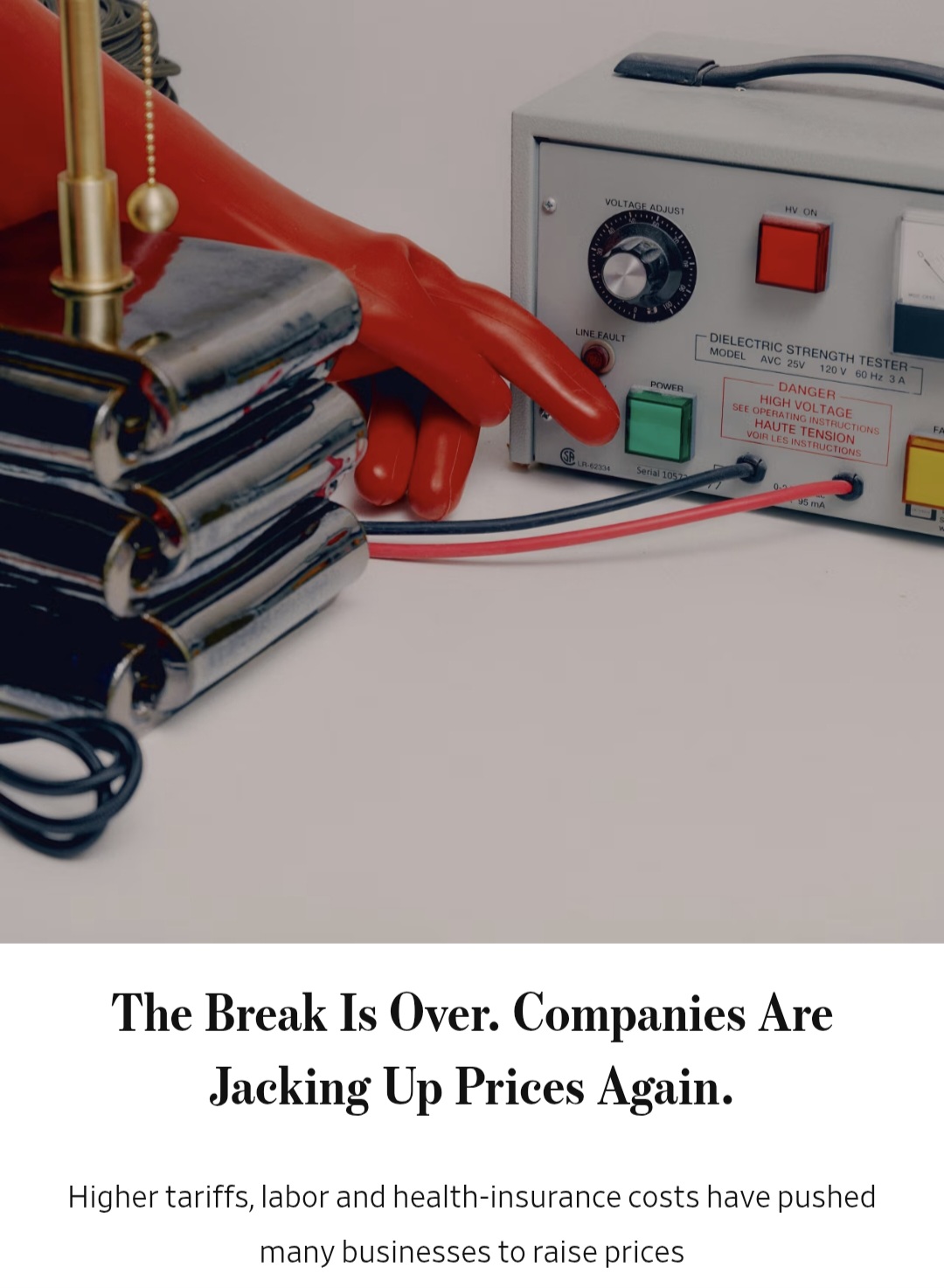
https://www.wsj.com/business/price-increases-consumers-businesses-b70e4542?mod=hp_lead_pos2
The pass-through price rises are coming though:
https://www.wsj.com/business/price-increases-consumers-businesses-b70e4542?mod=hp_lead_pos2
This narrative has been iterated for about 9 months now. At some point it will either be true or false, but I do not know what data point can be used to confirm the result. If the downside, defaults. But if the upside…I don’t think it will actually show up anywhere, and the narrative will just continue until there’s something else to talk about.
Its an interesting issue. I have been surprised by the lag effects so far.
Justin Wolfers had a good explanation. Imports were about 20% of GDP. Figure a 15% extra tariff, nd that’s about 3% of GDP. Now cut it back tp about 2z of GDP because of loopholes, special exemptions, and “deals”.
Now for awhile, importers will hold prices, absorbing the increase themselves (hoping they go way?), so he estimated the prices pass through beginning in 2026. It might take a year for it to wash thru the whole economy, so let’s say a 1% goose up to inflation for two years. After that, there isn’t a clear inflationary effect unless the tariffs rise more.
This all makes sense to me in principle. My best guess is that the timing of prior reserves running out for individual companies will be spaced out enough, and have a wide enough distribution in individual volume, that it will be a generally smooth transition. All the true shock effects may have already occurred, and it’s just a slow boil for a bit. Big auto manufacturers and such may have headline-worthy announcements, but consumers will be impacted by more of the small stuff. Local businesses may still see some trouble.
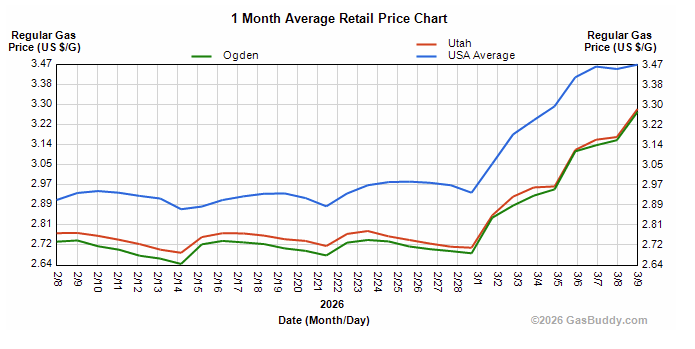
My recent fill ups at my local Sam’s Club:
2/27: 2.369/gallon
3/5: 2.349/gallon
3/8: 2.759/gallon
From Gasbuddy:
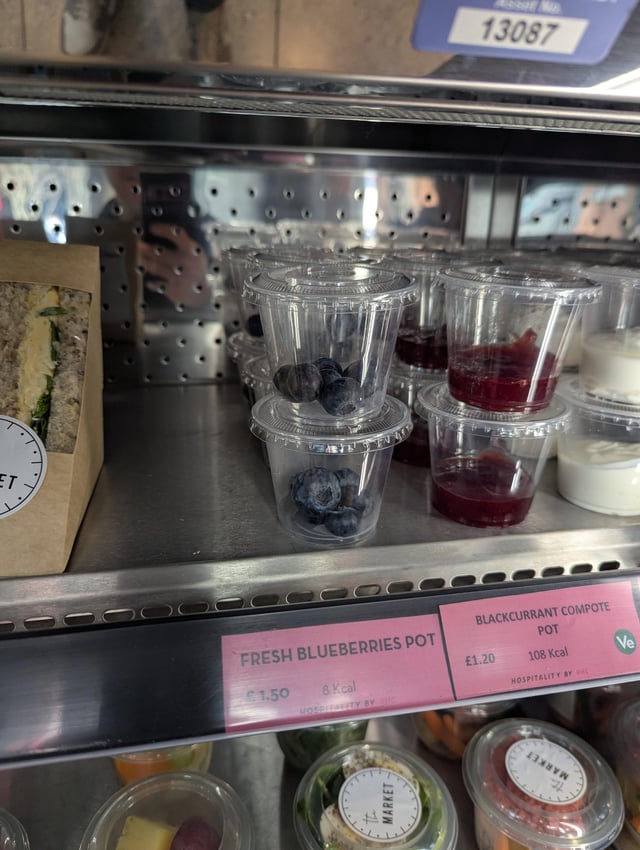
The contents settled during shipping, right? 
I think one of those blueberries ate a couple of the other ones.
My London daughter, her husband and their daughter arrive next Wednesday to live with us for a year. I must take them blueberry picking on one of the many blueberry farms near Vancouver. Blueberries are a bargain here, certainly relative to London!
Even cheaper in NL where they grow wild all over the place, but are also somewhat smaller than those blueberries.
Also, why waste time eating blueberries when saskatoon’s are the vastly superior berry.
We have huckleberries growing wild here throughout BC but the big plump blueberries are only on farms.
Salmon berries are probably the most widespread edible wild berry in BC. Delicious! In Ontario, there were lots of huckleberries, black caps and red raspberries in the wild.
Growth down and inflation up. More of that to come at this point.
Saskatoons are widespread in BC, being present throughout most of the interior and probably into coastal areas.
That sounds interesting. Is this part of a longer-term move or just to see how they like it for a year?
We are hoping it may turn into a longer term move. It will depend on what employment opportunities present themselves here. I have introduced them to some well-connected folks in the not for profit sector.
Are we not due for some metric more useful than GDP? I understand it’s easy to retrieve. I just don’t see why it is important for economic decisions.
If I hire 100 people to dig holes @$200/ day, and at the same time hire another 100 people to fill those holes the next day…GDP goes up $40,000 per day. What the hell is that? Certainly not a measure of general welfare, nor efficiency, nor anything else I find informative. It’s crazy
.
We use it because we just always have and it’s available. Using meaningless numbers is unlikely to result in good policy.
If you are so inclined. Get the annual figures for GDP growth for Ireland over the past 15 years. One year it went up 21.5% , simply because Apple shifted all their “intellectual property fees” to a subsidiary in Ireland to avoid corporate taxes. It’s a joke.
The big AI companies spent over 100B on AI CapEx in Q4, or about 1.3% of GDP, so excluding that, we would have printed a contraction. Probably going to see the same in Q1. I’d call it a recession at this point.