Can these big datacenters be repurposed for housing? Could be a good transition once they figure out they have overbuilt.
I appreciate that this is a high end steakhouse but $85 for a rib-eye steak? The vegetables are probably extra? Wasn’t sure whether this article belonged in an inflation thread or in an income inequality one.
1 Like
Or giant ballrooms after removing the computers?
That’s pretty much the going rate these days. Buy at a store. cook it yourself, then tip yourself.
Had a 1 lb Spencer Steak the other day for luckfest (more lunch than breakfast imo). It was in the freezer and we need room for the hoidays. It was $34 or so. Prime. Tasted pretty good.
Vancouver has the highest restaurant prices in Canada. I haven’t entertained a client here at a high-end steakhouse in almost 20 years so just checked the menu of one I used to frequent. They were $40-$50 then, now they are:

That is Canadian dollars so you should multiply by 0.7 to get US dollars. The steakhouse in the NY Times article was in the Southeast USA so probably less expensive than NYC, L.A. or SF.
This fits in one of our economic threads, not sure which one.
Trump’s article of faith: Economy will soar in '26
https://www.axios.com/2025/12/15/trump-economy-2026-income-inflation
Basically, Trump is convinced the economy is going to take off in the first quarter of 2026. The BBB includes a lot of tax cuts, they will show up as bigger refunds to individuals and more incentives for business expansion. (yes, they increase the deficit, but that’s not a problem in 2026) Also, AI capital spending just continues to grow. Trump’s doing everything he can to encourage that.
I can’t say that he is wrong, I expect deficit spending to “heat up” the economy. I can point out some negatives (what about inflation?), but I have no way of weighing them against each other.
My thesis on how the economy performs in 2026 hinges on how the global financial markets respond to Trump replacing Powell with a toady. I’m also worried about the AI bubble popping. I see lots of pins out there.
Canadian November 2025 YOY inflation was a benign 2.2% so I expect the US will not show a dramatic change either. Food prices were 4.7% higher.
You have to look at consumption.
The top 10% of the US Income distribution is now driving 50% of consumer spending.
This is what happens when inflation on essential items soars (which broadly impacts the bottom 30-50% of the income distribution more), while Tax Cuts from the BBB are heavily tilted to the top 10%
Tariffs also have the largest impact on those at the bottom of the income distribution (we are already seeing distress at the credit level there)
So one way to track this is if that 50% consumer spending (by top 10%) keeps increasing while wages (for non-higher earners) stay below inflation.
I say this because we are now seeing a reversal of Biden era wage increases for lower income earners being higher than higher earners. During Biden’s time, lower earners got sizeable wage increases following the inflationary supply shocks and demand side policies. This worked to keep inflation higher.
So this indicates that lower earners are very likely to take an economic beating over 2026 if Trump follows through with his policies. So inflation will likely be attenuated by poor wage rises at the bottom of the income distribution.
The delusional Trump-pleasing thinking continues.
This guy is a piece of work.
Hassett and this guy are two of the most incompetent Trump bootlickers that I have ever seen.
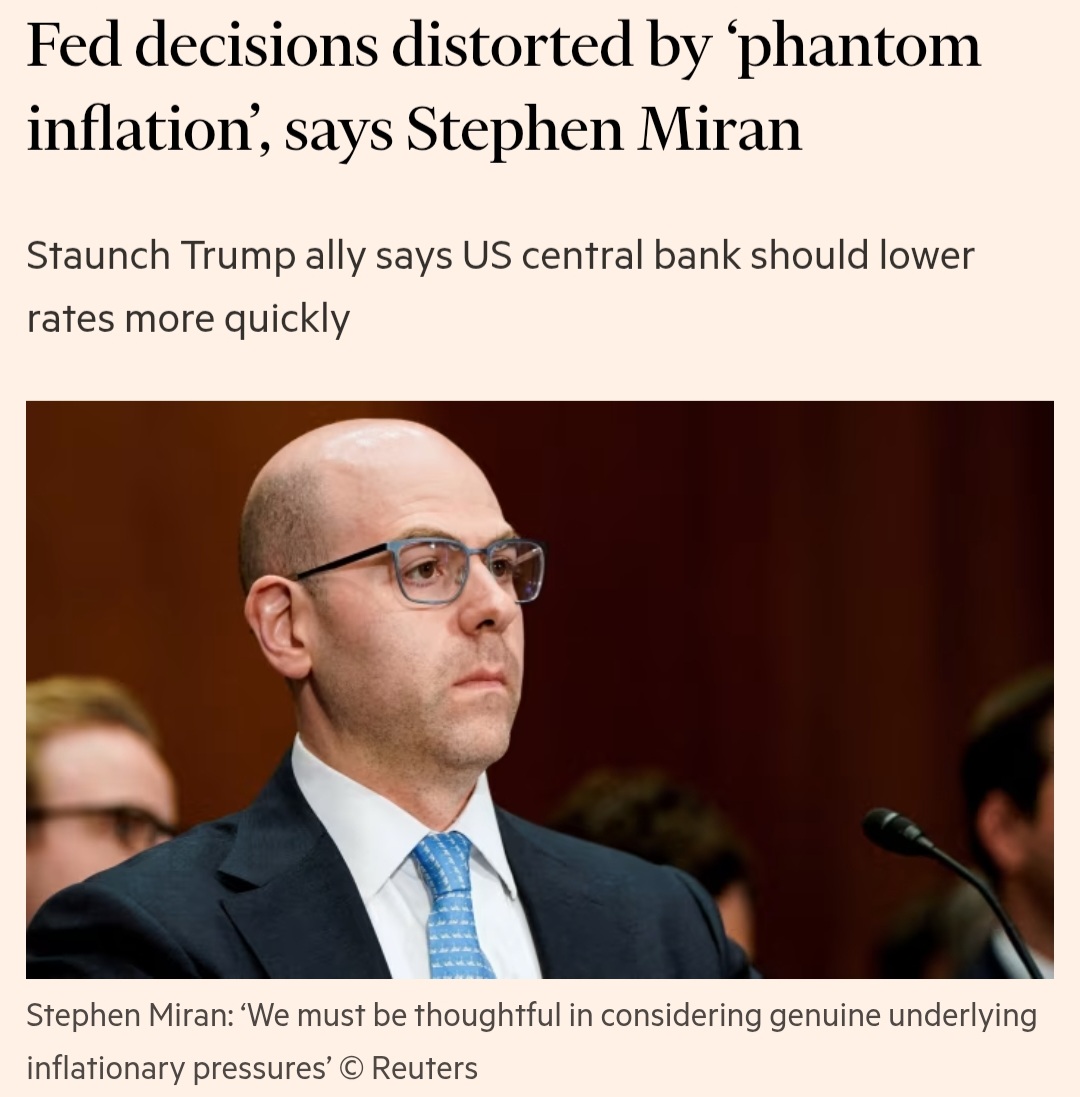
I was at an Upscale Restuarant recently (not super high end, but a smidge more elegant than Texas Roadhouse) and the steak prices were definitely up there.
I assume the “10% consumes 50%” statement uses dollar weighted consumption. Therefore, inflation doesn’t impact this stat. If consumption were measured in real goods, and it was higher in goods purchased by lower income people, then the ratio of real goods purchased could change due to inflation.
If the tax cuts favor high income people, then we could have a political impact that involves high income people feeling things are going well and other people feeling things are getting worse. According to the article, Trump is looking for no tax on tips and overtime as being important to low income people. Also, a higher standard deduction for people over 65 is likely to be felt more by non-rich people. I don’t know what changes impact higher income people. Much of the cost for them is simply and extension of 2017 cuts.
But, again, I have no insight on how to trade off the pros and cons, since I think prices will continue to go up.
This caught my eye. It indirectly points to the chaos and uncoordinated branches inside the administration . When I think of those who might benefit from the no tax on tips, I think of hospitality workers. Meanwhile, inside a different arm of the administration, we find a priority placed on increasing the HC costs for those withou we sponsered HC.
So I guess trump is hoping those folks that fall in both buckets will approve of the new normal?
Yep. Tipped workers probably don’t get employer subsidized health insurance and they are looking at the ACA marketplace. And, of course, other part time workers who don’t get tips are just seeing the health insurance part of that.
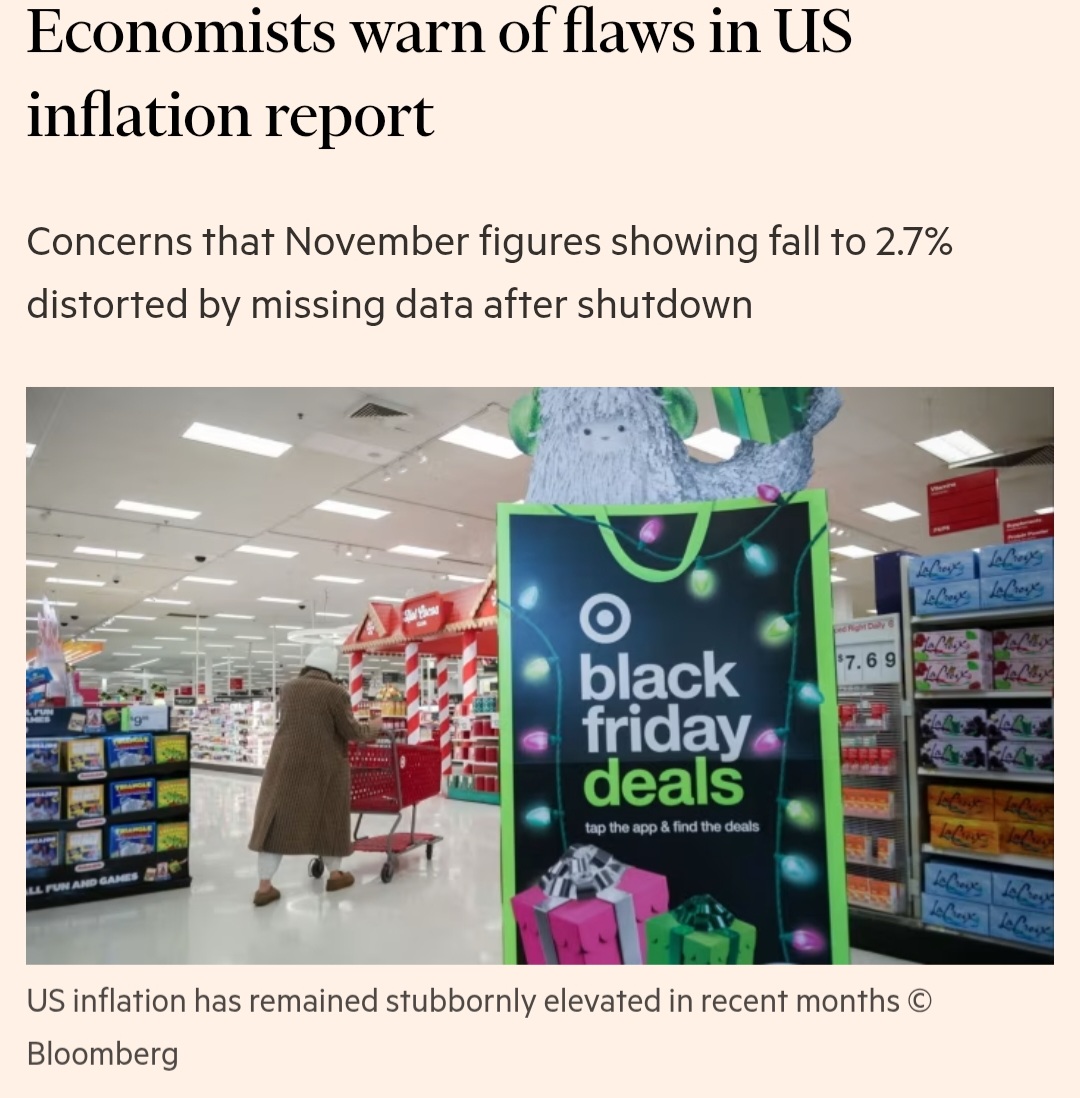
trust nothing from the American government
1 Like
Who ya gonna believe, your credit card statement or dear leader?
One of the issues it that last year the CPI went up from Sept to Oct then down from Oct to Nov though still higher than Sept.
This year the numbers show the CPI going down from Sept to Nov with no Oct number for comparison.
It will be interesting to see December’s with the drop in gas prices down roughly 6% by my estimation. That will have a tendency to pull down the overall CPI and while December usually goes down partly because of energy but also holiday deals, last year December actually went up, so if this year goes down then the overall rate will go down from the 2.7% Y/Y in Nov.
But wait for the first quarter of 2026 when a lot of the inflation normally happens anyway. Last years December to February increase was an annualized 6.8%.
Taken individually, lagged tariff pass‑through, tightening labor supply, looser fiscal policy, and accommodative financial conditions would each push inflation modestly higher. Taken together—and interacting with increasingly fragile household inflation expectations—they create a macro environment in which inflation rising above 4 percent by the end of 2026 is not only plausible but arguably the most likely scenario.